
Solutions › Liquid Load Banks
Mastering High-Density Infrastructure Through Integrated Performance.
We bridge the divide between power and cooling. FluxTec Liquid provides the industry's first integrated platform to commission electrical and mechanical infrastructure as a single, unified system.

The Challenge
Commissioning Tools Had Not Kept Pace With Liquid Cooling.
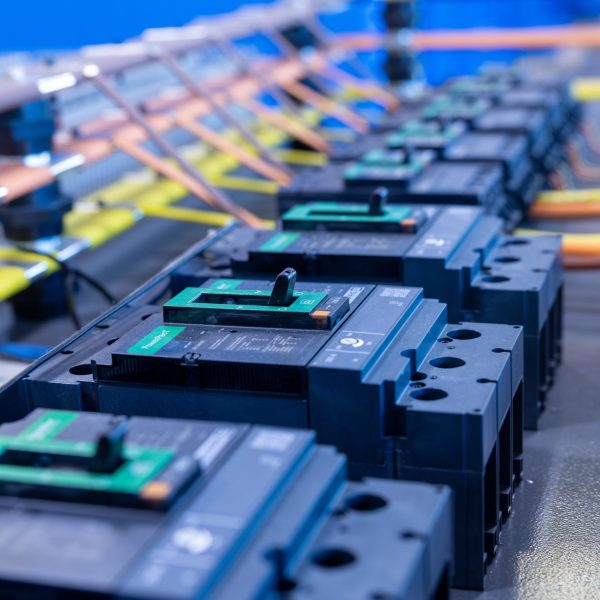
Data centers have long relied on integrated systems testing to validate electrical and mechanical infrastructure together. But as high-density AI and HPC environments shifted toward direct-to-chip liquid cooling, the available load-testing equipment was not designed to replicate the operating conditions of modern Technology Cooling Systems.
That gap demanded a purpose-built liquid load bank: one capable of applying electrical and thermal load while dynamically controlling flow and pressure to emulate real-world server behavior.
FluxTec engineered that solution, giving commissioning teams a more accurate and rigorous way to validate liquid-cooled infrastructure before it goes live.
The Solution: LLB 670 Series
Real-World Performance Simulation.
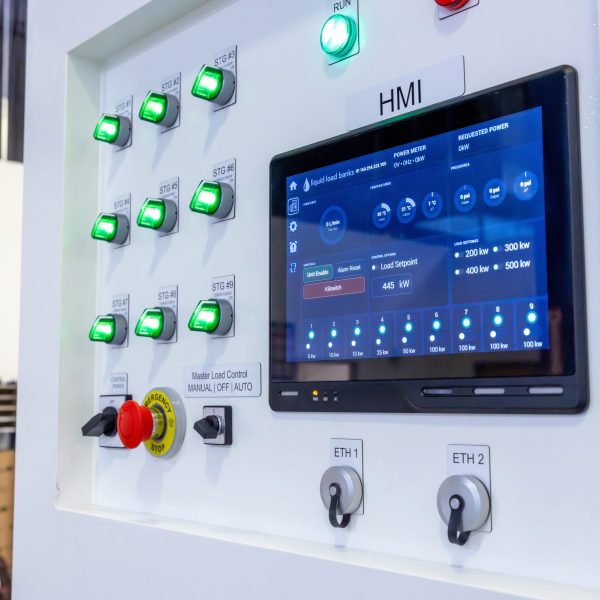
You can't validate the future with the tools of the past. FluxTec's patent-pending LLB 670 liquid load bank delivers precision testing that simulates real-world operational environments.
By mimicking the actual heat and energy flux, we ensure your facility meets strict Service Level Agreements (SLAs) and operates at peak performance throughout its entire lifecycle, from commissioning onward.

What Sets Us Apart
Key Capabilities
Integrated Commissioning
A more advanced approach to simultaneous electrical and liquid cooling validation, using dynamic flow and pressure control to recreate the real-world conditions of high-density IT infrastructure.
Precision Simulation
Exact control over flow and pressure to replicate live compute loads with unprecedented accuracy.
Voltage Flexibility
Native dual voltage support for 415V and 480V environments, providing the flexibility to support a wider range of IT equipment and data center architectures.
Intelligent Control
Advanced remote control and block loading capabilities for complex test scripts, managed from a single interface.
Certified Reliability
Manufactured under ISO 9001 standards and fully UL 508A compliant. Engineering you can trust.
Why FluxTec Liquid?
Solutions that Endure.
We don't just build boxes; we design peace of mind. Whether you are commissioning a hyperscale data center, building a colocation facility, or retrofitting for AI, FluxTec provides the proof you need to sleep at night.
Have a question?
Frequently Asked Questions
What is a liquid load bank and how is it different from traditional load banks?
A liquid load bank applies electrical load and transfers the resulting heat into a fluid loop, replicating the electrical and thermal demands of liquid-cooled IT equipment.
Traditional air-cooled load banks have long been used inside the data hall to test electrical infrastructure while producing heated air to validate HVAC systems. This closely replicated the way air-cooled servers consumed power and released heat into the white space.
As IT equipment has shifted toward direct-to-chip liquid cooling, commissioning requires equipment that can reproduce those loads through the liquid cooling system. Liquid load banks allow electrical infrastructure and Technology Cooling Systems to be tested individually and together as a complete system.
The FluxTec LLB 670 goes further by dynamically controlling flow and pressure to more accurately emulate real-world IT operating conditions.
Why is integrated commissioning important for modern data centers?
Modern data centers depend on multiple electrical, mechanical, and control systems operating together reliably. Individual components may be tested at the factory and each system may be commissioned independently, but integrated commissioning validates how the complete installed infrastructure performs as one system.
By placing electrical and cooling infrastructure under realistic operating conditions, integrated commissioning helps identify issues that may only emerge when systems interact. This improves safety and reliability, reduces the risk of downtime, and provides greater confidence that the facility is ready for live IT deployment.
What makes the LLB 670 Series unique?
Why is dual voltage capability important?
The LLB 670 natively supports both 415V and 480V power environments, allowing it to match a wider range of IT equipment and data center electrical architectures.
This flexibility enables commissioning teams to use the same platform across different facility designs without relying on separate load bank models for each voltage.
How does FluxTec ensure reliability and compliance?
FluxTec systems are manufactured under ISO 9001 standards and comply with UL 508A requirements. This ensures consistent quality, safety, and performance for mission-critical infrastructure testing.
FluxTec systems are engineered and manufactured for the demands of mission-critical commissioning. The LLB 670 incorporates an ASME Section VIII U-stamped pressure vessel, providing third-party verification that the vessel was designed, fabricated, inspected, and tested in accordance with recognized pressure vessel requirements.
The system is built to UL 508A requirements, while ISO 9001 manufacturing processes support consistent quality and repeatability. Together, these standards provide greater confidence in safety, reliability, and performance under demanding field conditions.
Why is the ASME U-stamp important?
The ASME U-stamp confirms that the pressure vessel has been designed, fabricated, inspected, and tested in accordance with ASME Section VIII requirements through an independently verified quality-control process.
That is critical because a liquid load bank operates as part of a pressurized fluid system. An ASME U-stamped vessel provides greater assurance of safe construction and pressure integrity, helping protect personnel, equipment, and the facility.
ASME-stamped construction is also required or strongly preferred by many authorities having jurisdiction, engineers, facility owners, and insurance providers. Specifying a U-stamped vessel can help support regulatory acceptance, reduce project risk, and avoid compliance issues during installation and commissioning.